
The Short Answer
Getting a garage door ready for winter in Jefferson comes down to five things: seal the gaps, test the balance, lubricate the moving parts with cold-rated grease, check the opener and its backup battery, and clean the salt and grime off the tracks before it hardens into the hardware. Do these now, while temperatures are still mild, and you avoid the frozen-door, cracked-panel, dead-opener problems that show up the first week it dips below zero.
Wisconsin winters don't ease in. One week it's crisp fall weather, the next there's ice on the driveway and road salt crusted on every vehicle that pulls in. A garage door that was running fine in September can start binding, groaning, or refusing to open once the cold really sets in — not because anything broke overnight, but because small issues that didn't matter in warm weather suddenly do.
Seal the Gaps Before the Cold Gets In
Check the rubber weatherstripping along the bottom of the door and the vinyl seals on the sides and top of the frame. Over a humid Wisconsin summer, rubber seals can dry out, crack, or pull loose from their tracks. In winter, any gap lets in cold air, blowing snow, and moisture that can freeze and expand.
- Bottom seal: press a flashlight against it from inside the garage at night; if you see light gaps along the floor, it's time to replace it.
- Side and top seals: look for cracking, gaps, or sections pulling away from the frame.
- Threshold seal: if your garage floor slopes or has gaps at the edges, a threshold seal keeps out melting snow and slush before it refreezes against the door.
This matters more here than in milder climates because freeze-thaw cycles during the spring thaw can push water through small gaps, freeze it overnight, then let it melt again the next day — a cycle that slowly works seals loose and lets moisture reach wood framing or metal components.
Test the Balance and Listen to the Springs
Cold steel is less forgiving. Torsion springs that are slightly under-tensioned in October can struggle noticeably by January, because the metal itself gets stiffer and less flexible in deep cold, putting more strain on an opener that's already compensating for a door that's out of balance.
Disconnect the opener (pull the release handle) and manually lift the door halfway. It should stay in place on its own. If it drifts down or shoots up, the springs are out of balance and the opener is doing extra work to compensate — work that gets harder as temperatures drop and lubricants thicken. Don't attempt to adjust torsion springs yourself; they're under heavy tension and it's genuinely dangerous. This is a job for a technician.
Lubricate With the Right Product
Summer humidity and storm season can wash grease and oil off hinges, rollers, and tracks, or let it get gritty with dust and pollen. Before winter, clean off old grime with a rag and re-lubricate with a silicone-based or lithium-based garage door lubricant — not WD-40, which is a solvent and degreaser, not a lubricant, and not a general household oil, which thickens and gets sticky in cold temperatures.
- Hinges and rollers (unless you have sealed/nylon rollers, which don't need lubrication)
- The torsion spring itself, lightly
- The track where rollers ride — a light film, not a heavy coating that attracts dirt
A well-lubricated door runs quieter and puts less strain on the opener motor in cold weather, when everything mechanical is naturally stiffer.
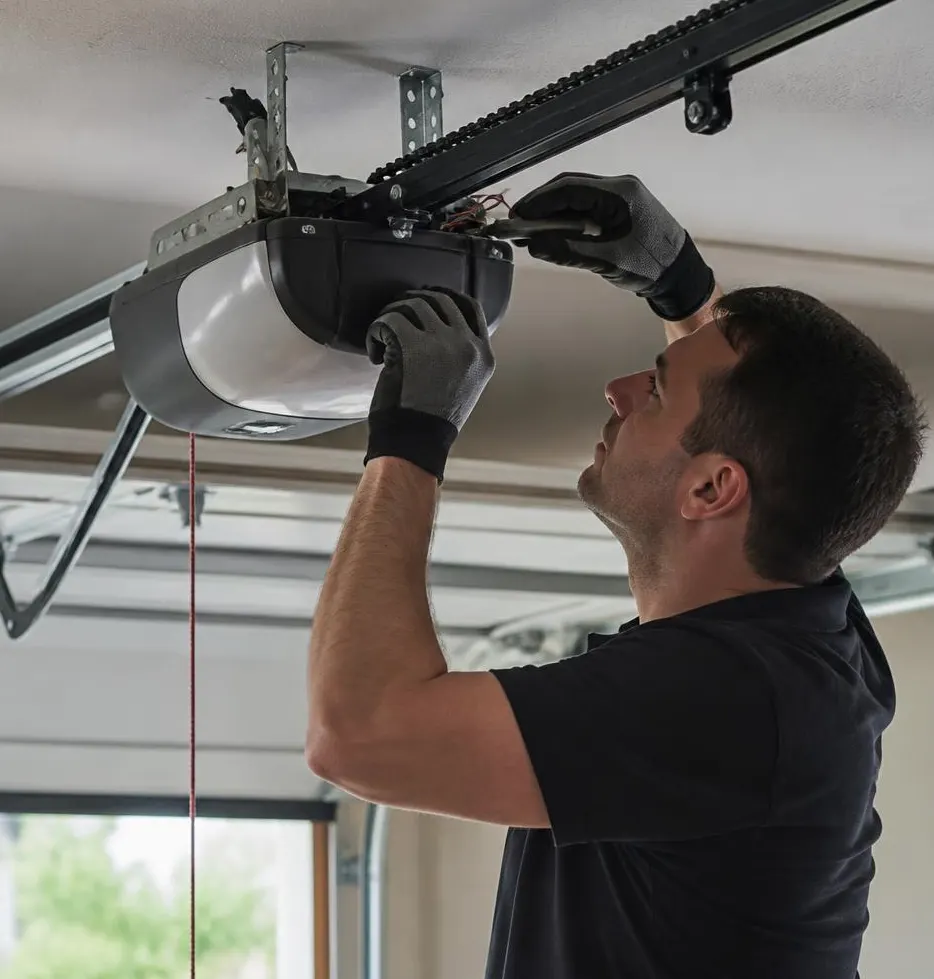
Check the Opener and Its Battery Backup
Cold weather is hard on batteries, and if your opener has a battery backup (standard on most modern models), test it now rather than during a power outage in a January storm. Batteries that tested fine in summer heat can fail much sooner in sustained cold.
Also check that the opener's force settings aren't already maxed out trying to compensate for a door that's slightly out of balance or binding on its track — a problem that gets worse, not better, as temperatures drop.
Clean the Tracks and Check for Salt Damage
Road salt and de-icing chemicals get tracked into garages on tires and boots all winter long, and that residue is corrosive to metal tracks, hinges, and the bottom panel of the door itself. Before winter starts, wipe down the tracks with a damp cloth to clear out any leftover debris from fall, and plan to do a quick wipe-down every few weeks through the season once salt starts coming in with the snow.
Retest the Auto-Reverse Safety Feature
Place a block of wood flat on the ground where the door closes. The door should reverse immediately on contact. Cold weather can affect sensor alignment if a garage has settled or shifted slightly, so this is worth testing seasonally, not just once.
When to Call Jefferson Garage Door Pro
If your door is out of balance, the opener strains or stalls, or you hear new grinding or popping sounds when you do these checks, that's your cue to call before winter — not after a spring snaps or an opener burns out on the coldest morning of the year. Jefferson Garage Door Pro handles full garage door maintenance visits that cover balance testing, spring tension, hardware inspection, and lubrication in one appointment, and if a spring replacement or opener repair is needed, we can usually get it scheduled before the hard freeze sets in.
Don't wait for an emergency call in the middle of a snowstorm. If you're in Jefferson, Fort Atkinson, Lake Mills, Watertown, Johnson Creek, Waterloo, Cambridge, or Palmyra, contact Jefferson Garage Door Pro today to get your garage door checked and ready before winter arrives for good.