
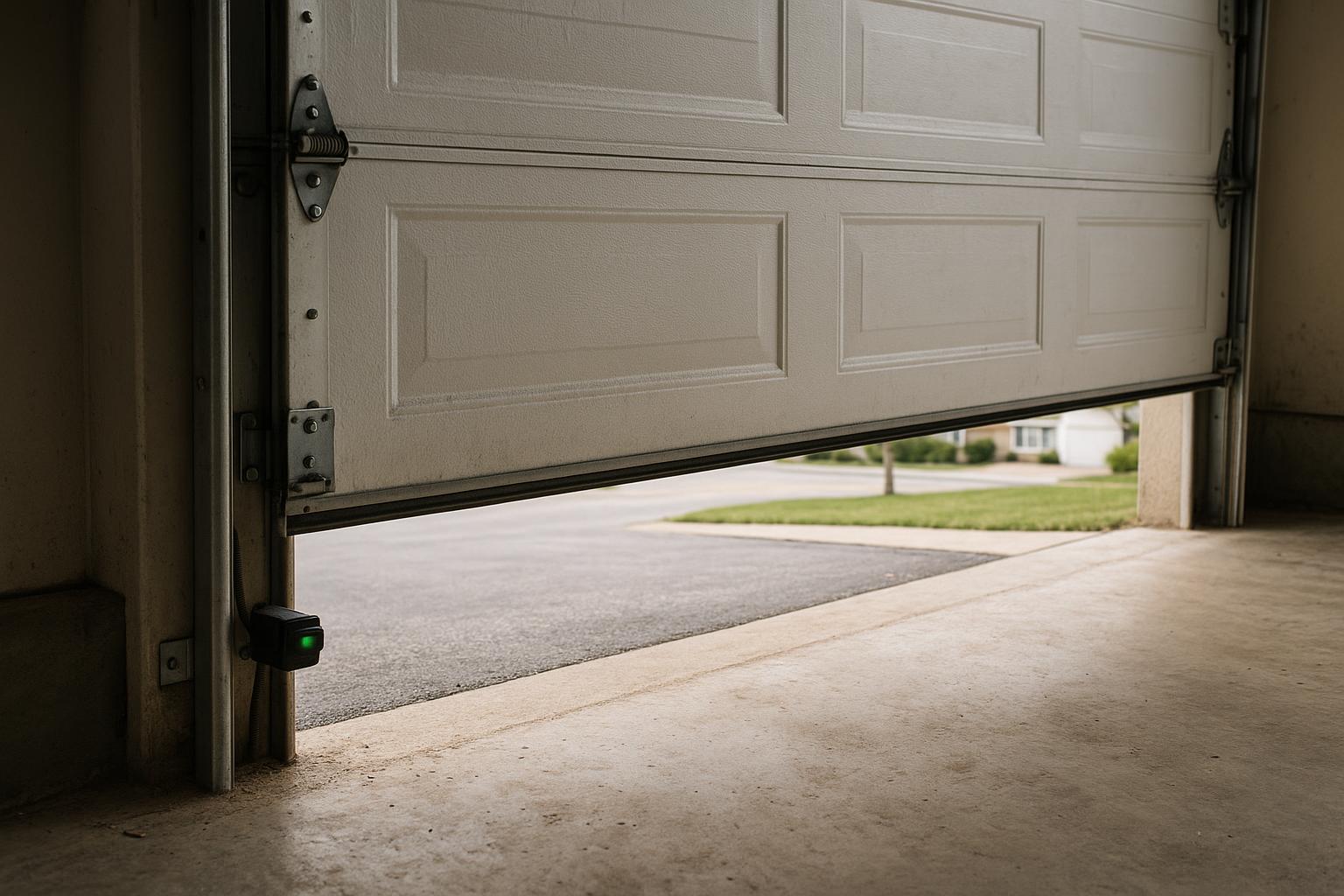
That Frustrating Moment When Your Garage Door Won't Stay Closed
You press the button on your remote, watch your garage door glide downward, and then — just inches from the floor — it stops and reverses right back up. You try again. Same result. Maybe it works on the third attempt, maybe it doesn't. Either way, you're left standing in your driveway in Jefferson wondering what just happened.
This is one of the most common garage door problems homeowners call us about, and the good news is that it's almost always fixable. The tricky part is that several different issues can cause this exact same symptom. Let's walk through each one so you can understand what's happening and decide whether it's a quick DIY adjustment or something that needs professional attention.
Understanding Why Your Garage Door Reverses
Modern garage door openers are equipped with safety features designed to prevent the door from crushing objects, pets, or people. These safety mechanisms are required by federal law and have prevented countless injuries since they became mandatory in 1993. When your door reverses unexpectedly, it's usually because one of these safety systems is being triggered — even when nothing is actually in the way.
Here are the most common reasons your garage door reverses before closing completely.
1. Misaligned Safety Sensors
This is the number one cause of garage doors reversing prematurely. Every garage door opener manufactured after 1993 has two photo-eye sensors mounted near the bottom of the door tracks, one on each side. These sensors send an invisible beam across the opening. If anything breaks that beam, the door reverses.
Over time, these sensors can get bumped, shifted, or knocked out of alignment by a bicycle tire, a lawn mower, or even vibrations from the door itself. When the sensors can't see each other, the opener interprets this as an obstruction and reverses the door.
What to check:
- Look at the LED lights on each sensor. Most models show a steady green light when aligned and a blinking light when misaligned.
- Gently adjust the sensors until both lights are steady.
- Clean the sensor lenses with a soft cloth — dirt, cobwebs, and condensation can block the beam.
- Make sure no objects are sitting near the sensors or partially blocking the beam path.
2. The Close-Limit Switch Needs Adjusting
Your garage door opener has a setting called the close-limit switch (sometimes called the travel limit) that tells the motor exactly how far the door should travel before it's considered fully closed. If this setting is off by even a small amount, the opener thinks the door has hit something solid before it reaches the floor, and it reverses as a safety precaution.
This issue often shows up after a new opener installation, a spring replacement, or even seasonal temperature changes that cause metal tracks and hardware to expand or contract slightly. Homeowners in Jefferson and the surrounding areas like Fort Atkinson and Lake Mills often notice this problem during the transition from summer to winter when temperatures drop significantly.
What to check:
- Consult your opener's manual for instructions on adjusting the down-limit setting. Most models use a small screw or dial on the back of the motor unit.
- Make small adjustments — usually a quarter turn at a time — and test the door after each one.
- If you're not comfortable making this adjustment, a garage door technician can dial it in quickly.
3. Worn or Broken Springs
Your garage door springs do the heavy lifting — literally. They counterbalance the weight of the door so the opener motor doesn't have to work as hard. When a spring is worn, weakened, or broken, the door becomes much heavier than the opener expects. The motor strains to lower the door, detects excessive resistance, and reverses.
You might also notice that the door feels unusually heavy if you try to lift it manually, or that the opener motor sounds like it's working harder than normal.
Important safety note: Garage door springs are under extreme tension and can cause serious injury if handled improperly. Spring replacement is not a DIY job. If you suspect a spring issue, call a professional. At Jefferson Garage Door Pro, spring replacement is one of our most common service calls, and we carry the most popular sizes on our trucks so repairs can often be completed in a single visit.
4. Track Problems or Obstructions
The metal tracks that guide your garage door need to be clean, properly aligned, and free of dents or debris. Even a small obstruction — a pebble, a piece of ice in winter, or a slight bend in the track — can create enough resistance to trigger the opener's auto-reverse feature.
What to check:
- Visually inspect both tracks from top to bottom. Look for dents, bends, or gaps where the track has pulled away from the wall.
- Remove any visible debris from the tracks.
- Check that the tracks are plumb (vertical sections) and properly pitched (horizontal sections near the ceiling).
- Lubricate the tracks and rollers with a silicone-based garage door lubricant.
5. Damaged or Worn Rollers
Garage door rollers wear out over time, especially the standard plastic rollers that come with many doors. When rollers crack, chip, or seize up, they create friction and resistance in the tracks. The opener senses this resistance and may reverse the door as a result.
Replacing worn rollers is a relatively affordable maintenance item that can dramatically improve how smoothly and quietly your door operates. Nylon rollers are a popular upgrade for homeowners in Watertown, Johnson Creek, and throughout Jefferson County because they're quieter and last longer than standard rollers.
6. The Opener Force Setting Is Too Low
In addition to the travel limit, your opener also has a force setting that controls how much power the motor uses to open and close the door. If the downward force is set too low, the opener may not have enough power to push the door all the way to the floor, and it reverses because it thinks it has encountered resistance.
What to check:
- Locate the force adjustment on your opener (usually a dial or screw near the travel limit adjustment).
- Increase the down-force setting slightly and test the door.
- Be careful not to set the force too high — the door should still reverse if it contacts an actual obstruction. Test this by placing a 2x4 flat on the ground under the door. The door should reverse when it touches the board.
When to Call a Professional
If you've checked the sensors, cleaned the tracks, and made minor adjustments without solving the problem, it's time to call in a professional. Some causes of door reversal — like spring issues, track misalignment, or opener motor problems — require specialized tools and experience to diagnose and repair safely.
A garage door that won't close properly is more than an inconvenience. It's a security risk for your home and everything stored in your garage. It also leaves your garage exposed to weather, pests, and temperature extremes that can affect your energy bills.
Keep Your Garage Door Running Smoothly
Many of the problems described above can be prevented with regular garage door maintenance. An annual tune-up that includes lubrication, hardware tightening, sensor alignment, and a safety inspection can catch small issues before they turn into frustrating breakdowns.
If your garage door is reversing and you can't figure out why, Jefferson Garage Door Pro is here to help. We serve homeowners and businesses throughout Jefferson, Waterloo, Lake Mills, and the surrounding communities with honest, reliable garage door service. Give us a call and we'll get your door closing the way it should.