
That Grinding, Squealing, or Banging Isn't Normal
You press the button, and instead of the smooth hum you're used to, your garage door sounds like it's auditioning for a horror movie. Grinding, squealing, popping, rattling — none of these sounds are something you should just live with.
A noisy garage door is one of the most common complaints we hear from homeowners in Jefferson and the surrounding area. While some sounds are minor and easy to fix, others can signal a serious mechanical issue that needs professional attention before it turns into an expensive repair — or a safety hazard.
Here's a breakdown of the most common garage door noises, what causes them, and what you should do about each one.
Squealing or Screeching Sounds
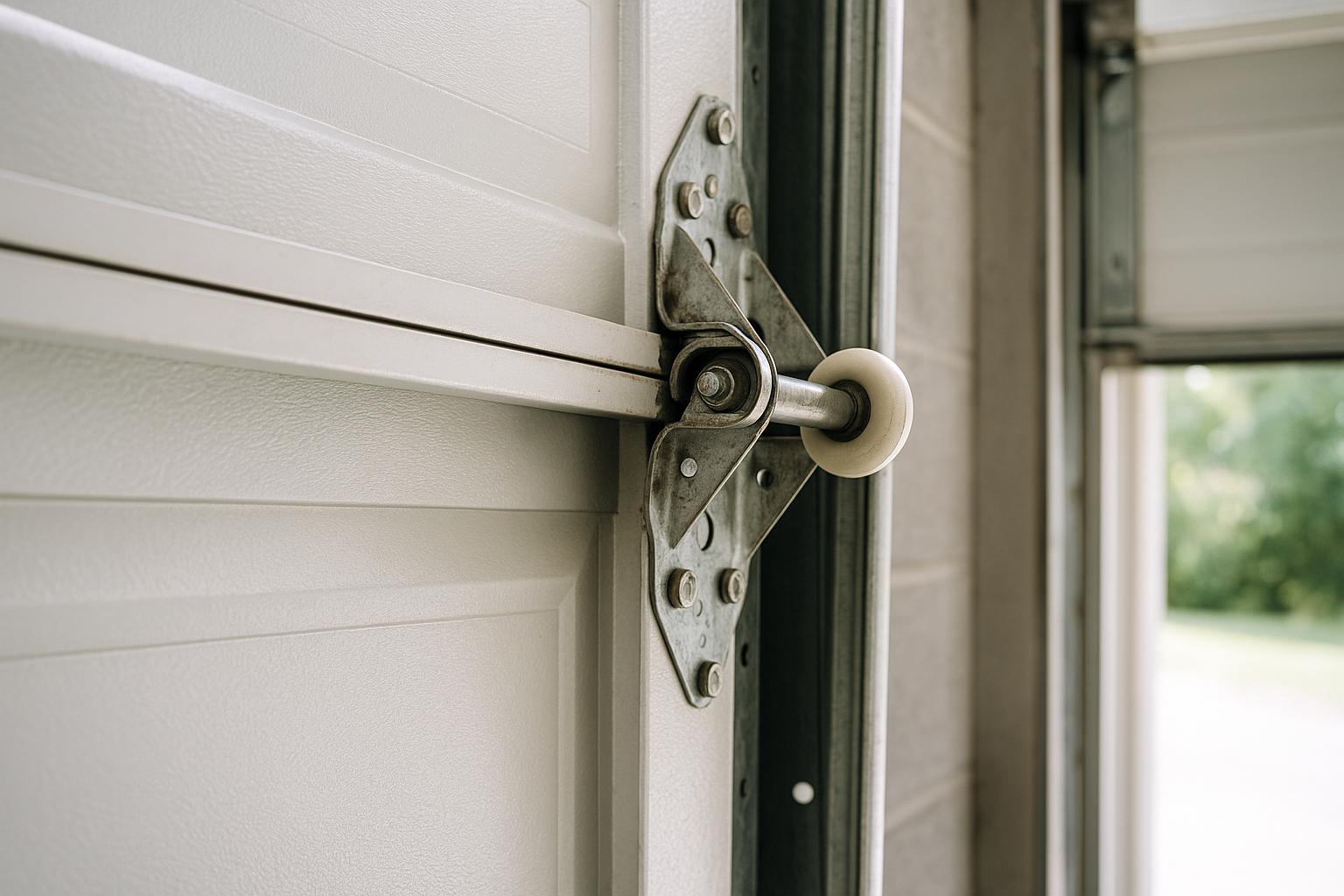
A high-pitched squeal or screech when your garage door opens or closes is usually a lubrication problem. Over time, the metal components in your garage door system — including rollers, hinges, and tracks — lose their lubrication and start grinding against each other.
Common causes:
- Dry or worn-out rollers (especially metal rollers without nylon coating)
- Hinges that need lubrication
- Lack of regular maintenance
What to do: Apply a garage door-specific lubricant (not WD-40, which is a solvent, not a long-term lubricant) to the rollers, hinges, and springs. If the noise persists after lubrication, your rollers may be worn out and need replacement. Nylon rollers are a great upgrade — they're quieter and require less maintenance than metal ones.
Grinding or Scraping Noises
If your garage door makes a harsh grinding or scraping sound, something is likely rubbing where it shouldn't be. This is a noise you don't want to ignore, because it often means components are wearing down quickly.
Common causes:
- Misaligned tracks causing the door to scrape against the rails
- Worn-out rollers that no longer glide smoothly
- A garage door opener with stripped gears
What to do: Visually inspect the tracks on both sides of the door. Look for gaps between the rollers and the track, or areas where the track appears bent or dented. If the tracks are misaligned, this is a job for a professional — attempting to adjust tracks yourself can be dangerous and may void your warranty. If the grinding seems to come from the opener motor itself, the internal gears may be failing and the unit may need repair or replacement.
Loud Banging or Popping
A sudden bang or pop when your garage door operates can be startling. In many cases, it's related to the torsion springs or the panels of the door itself.
Common causes:
- Torsion springs adjusting under tension (a single loud pop can indicate a spring has broken)
- Panels flexing due to temperature changes — something Jefferson homeowners deal with regularly given our Wisconsin climate
- Loose hardware that shifts during operation
What to do: If you heard a single loud bang and your door suddenly won't open or feels extremely heavy, a spring has likely broken. Do not attempt to operate the door or fix the spring yourself. Torsion springs are under extreme tension and can cause serious injury. Call a professional immediately for a safe replacement.
If the banging is more of a repetitive popping, check for loose bolts, nuts, and brackets along the door and track system. Tightening the hardware can often solve the problem.
Rattling and Vibrating
A rattling garage door usually points to loose components somewhere in the system. It's one of the easier problems to diagnose and often one of the simplest to fix.
Common causes:
- Loose nuts, bolts, or screws on the track, hinges, or opener bracket
- A loose chain or belt on the garage door opener
- The opener itself vibrating against the ceiling mount
What to do: Grab a socket wrench and tighten all the visible hardware on your garage door system, including the bolts on the track brackets, the hinge screws on the door panels, and the fasteners on the opener mounting bracket. If your opener uses a chain drive, check the chain tension — a sagging chain will slap around during operation and create a lot of noise. If you're tired of chain drive noise altogether, consider upgrading to a belt-drive opener, which operates much more quietly.
Ticking or Clicking Sounds
A rhythmic ticking or clicking as the door moves is often related to something small caught in the track or a minor issue with the rollers.
Common causes:
- Small debris — pebbles, dirt, or leaves — stuck in the track
- A roller with a flat spot or minor damage
- A worn bearing inside a roller
What to do: Clean out the tracks thoroughly using a damp cloth. Remove any debris you find. If the clicking continues, inspect each roller individually as the door moves slowly. A damaged roller will usually be visually obvious — look for flat spots, cracks, or wobbling. Replacing a single roller is inexpensive and can eliminate the noise entirely.
When to Call a Professional
Some garage door noises are easy DIY fixes — a little lubrication here, a tightened bolt there. But other sounds indicate problems that require professional tools, training, and experience to resolve safely.
Call a garage door technician if:
- You suspect a broken spring (loud bang followed by the door not working properly)
- The tracks are visibly bent or misaligned
- The opener motor is grinding internally
- You've tried basic troubleshooting and the noise hasn't improved
- The door is shaking, jerking, or moving unevenly
Ignoring persistent noises can lead to bigger failures down the road. A roller that's grinding today could seize up next week and pull the track out of alignment. A loose chain can eventually damage the opener's internal drive system. Catching these issues early almost always saves money.
Keep Your Garage Door Quiet With Regular Maintenance
The best way to prevent a noisy garage door is with routine maintenance. At Jefferson Garage Door Pro, we recommend having your garage door professionally inspected and serviced at least once a year. During a maintenance visit, we lubricate all moving parts, tighten hardware, inspect springs and cables, test the opener's safety features, and check track alignment.
Homeowners in Jefferson, Fort Atkinson, Lake Mills, Watertown, Johnson Creek, and Waterloo can count on us for honest, reliable service. If your garage door is making a sound that doesn't seem right, don't wait for it to get worse. Give us a call and we'll diagnose the problem quickly so you can get back to a smooth, quiet garage door.