
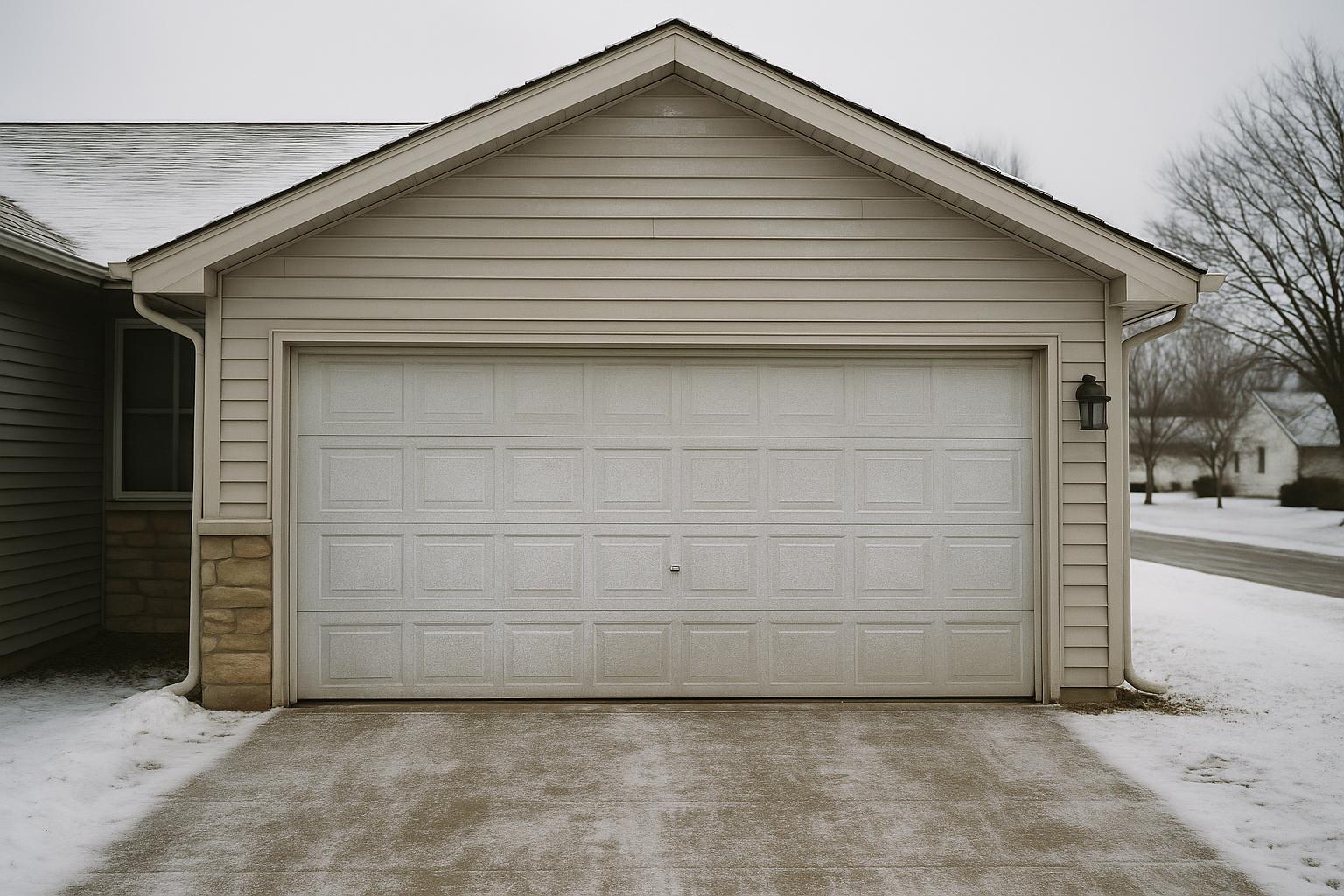
Winter Is Tough on Garage Doors in Jefferson
If you've lived in Jefferson, WI for even one winter, you know how brutal the cold can be. Temperatures regularly dip well below freezing, and that kind of sustained cold doesn't just make your morning commute miserable — it can cause real problems for your garage door system.
Your garage door is the largest moving part of your home. It relies on a combination of metal springs, rollers, tracks, cables, and an electric opener to function properly. Every one of those components is affected by extreme cold. Understanding how winter weather impacts your garage door can help you avoid unexpected breakdowns, costly repairs, and the frustration of being stuck in your driveway on a freezing morning.
How Freezing Temperatures Affect Garage Door Components
Springs Become Brittle and Break
Garage door springs are under enormous tension every time your door opens and closes. In cold weather, the metal contracts and loses flexibility. This makes springs more brittle and significantly more likely to snap without warning.
Spring failures are one of the most common garage door emergencies we see during winter months in Jefferson and surrounding areas like Fort Atkinson, Lake Mills, and Watertown. A broken spring means your door won't open — or worse, it could come crashing down unexpectedly. This is a repair that should always be handled by a professional due to the extreme tension involved.
Metal Tracks and Rollers Contract
The metal tracks that guide your garage door can contract slightly in freezing temperatures. While this contraction is small, it can be enough to cause the rollers to bind or the door to move unevenly. You might notice your door jerking, making grinding noises, or getting stuck partway up or down.
Steel and nylon rollers are both affected by cold, though in different ways. Steel rollers may become noisier, while nylon rollers can become stiff and less responsive. Either way, the result is a door that doesn't operate as smoothly as it should.
Lubricant Thickens and Stops Working
The lubricant on your springs, hinges, and rollers can thicken or even harden in extreme cold. When lubrication fails, metal parts grind against each other, increasing friction and wear. This accelerates the aging of your entire door system and can lead to premature component failure.
Weatherstripping Cracks and Shrinks
The rubber weatherstripping along the bottom and sides of your garage door is designed to seal out cold air, moisture, and pests. Over time, freezing temperatures cause this rubber to dry out, crack, and shrink. Once the seal is compromised, cold air pours into your garage, ice can form along the bottom of the door, and your energy bills go up.
In some cases, a damaged bottom seal can actually freeze to the garage floor, causing the door to stick or the seal to tear when you try to open it.
Garage Door Openers Strain Under the Load
Your garage door opener has to work harder in cold weather. Thickened lubricant, contracted metal, and a heavier-feeling door all put extra strain on the motor. Older openers or units that are already near the end of their lifespan may struggle to lift the door, strip their gears, or fail entirely.
If your opener is making unusual noises, moving the door more slowly than usual, or failing to fully open or close the door, cold weather stress could be the culprit.
What Jefferson Homeowners Can Do to Prepare
Schedule a Pre-Winter Maintenance Inspection
The single best thing you can do for your garage door before winter hits is to have it professionally inspected and maintained. A trained technician can check spring tension, lubricate all moving parts with cold-rated lubricant, inspect cables for fraying, test the balance of the door, and make sure the opener is functioning properly.
At Jefferson Garage Door Pro, we recommend scheduling maintenance in the fall before the first hard freeze. This gives us time to catch small problems before they become expensive emergencies in the middle of January.
Replace Worn Weatherstripping
Take a close look at the weatherstripping around your garage door. If you see cracks, gaps, or sections that have pulled away from the door, it's time for a replacement. New weatherstripping is relatively inexpensive but makes a significant difference in keeping your garage warmer and protecting the bottom of the door from ice buildup.
Use the Right Lubricant
Not all lubricants are created equal. Standard WD-40 is not ideal for garage door components, especially in cold weather. Instead, use a silicone-based or lithium-based garage door lubricant that's designed to perform in low temperatures. Apply it to the springs, hinges, rollers, and tracks at least once during the winter season.
Keep the Tracks Clean
Road salt, dirt, and debris from winter driving can accumulate in your garage door tracks. This buildup can interfere with the rollers and cause the door to operate unevenly. Wipe down the tracks periodically with a damp cloth to keep them clear.
Test the Door Balance
You can check your door's balance yourself by disconnecting the opener (pull the red emergency release handle) and manually lifting the door halfway. If it stays in place, the balance is good. If it slides up or falls down, the springs may need adjustment. An unbalanced door forces the opener to work harder and is more likely to cause problems in cold weather.
Important: Never attempt to adjust garage door springs yourself. The tension stored in these springs can cause serious injury. Always call a professional for spring adjustments or replacements.
Don't Ignore Warning Signs
If your garage door is making unusual sounds, moving slowly, or operating inconsistently, don't wait until it fails completely. Small issues in cold weather tend to escalate quickly. A minor adjustment today could save you from a full breakdown tomorrow.
What If Your Garage Door Is Already Stuck?
If your garage door is frozen shut, resist the urge to keep hitting the opener button. Repeatedly forcing the opener to try to lift a stuck door can burn out the motor or strip the gears. Instead, try these steps:
- Check the bottom seal for ice. If the door is frozen to the floor, carefully use a heat gun or hair dryer to melt the ice along the seal. Never use boiling water, as it can refreeze and make the problem worse.
- Try lifting the door manually after disconnecting the opener. If it won't budge, there may be a broken spring or another mechanical issue.
- Call for professional help. If you can't safely free the door, a technician can diagnose and fix the problem without causing further damage.
We offer emergency garage door service throughout Jefferson, Johnson Creek, Waterloo, and the surrounding communities for exactly these situations. Being stuck with a non-functioning garage door in sub-zero weather isn't just inconvenient — it can be a safety issue.
Stay Ahead of Winter Garage Door Problems
Wisconsin winters aren't going anywhere, but garage door breakdowns don't have to be inevitable. With a little preventive maintenance and attention to warning signs, you can keep your door operating reliably all season long.
If you're in Jefferson or any of the nearby communities we serve, Jefferson Garage Door Pro is here to help. Whether you need a pre-winter tune-up, a spring replacement, or emergency service on a frozen door, we'll show up on time and get the job done right. Give us a call before the next cold snap hits.